Share this
by Julie Bennett on August 1, 2021
Updated on July 29, 2026
A resource allocation tool is software that helps you assign the right people to the right work, then see who has room and who is overloaded before it becomes a problem. If you are still doing that in a spreadsheet, this is the upgrade that pays for itself: fewer blown deadlines, less unbilled overtime, and margins you can actually see.
Resource allocation sits inside the bigger job of resource management, and the two usually live in the same tool. So the first question is not which tool, but which job you are actually trying to fix.
Resource allocation or resource management: which do you need?
The two names get used interchangeably, and most tools cover both, so the label matters less than the job you are hiring it for. If your pain is deciding who works on what and keeping anyone from being buried, you are shopping for allocation. If it is longer-range planning, forecasting demand, and reporting across a whole portfolio, that is the management end. Knowing which one you care about most makes tools much easier to compare, because vendors lead with different strengths.
See utilization at a glance
A resource allocation tool earns its keep the moment you can see, in one view, who is overutilized and who has room. PSOhub shows this in both hours and currency and marks people who are on target against their booked time, so the number means something to finance as well as delivery.
By leveraging a utilization dashboard within a resource management solution, you can easily know based on hard data where your project and your people stand at any point. A line graph or custom dashboard of your choice with utilization percentages can show you what’s happening from three perspectives:
- Time
- Resources
- Money
"On a utilization dashboard, you can set thresholds for time and money and see who is being overutilized and who is underutilized. Project managers and/or business owners should be able to easily see and know what to expect with a calculation of actual hours versus expected workload."
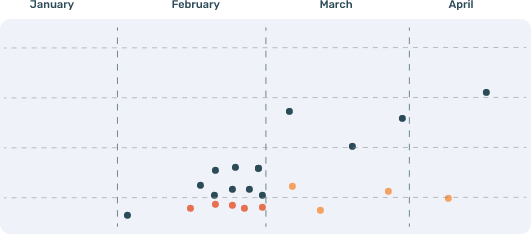
PSOhub Utilization Dashboard Example
The best resource management solutions will help you see that number in both hours and currency. For example, PSOhub marks those on target in green based on booked time, so you can clearly see the utilization percentage.
A utilization dashboard is the ultimate visual tool with resource management, empowering decision makers to make sense of numbers across multiple projects. PSOhub is big on helping users increase their billable utilization, aka how many billable hours there are compared to capacity. It does this by tracking your billable hours accurately and then displaying them in this convenient visual you can check 24/7 to see what’s happening with your resources.
Task-based, hours-based, or both
There are three options when it comes to capacity planning for your projects:
- Task-based
- Hours-based
- A combination of the two
Most resource management tools will offer you one or the other: task-based capacity planning or hours-based. The right capacity planning option will depend on the needs of your organization. For many small businesses, hours are not of the utmost concern when delivering projects. It’s more about tasks getting accomplished within a certain timeframe. For larger organizations, hours may be of a greater concern, in which case hours-based capacity planning is the way to go. And finally, for those that want the ultimate resource management control, you can go with a combination of the two to get uber precise.
Just make sure that whichever resource management solution you use, it has the capacity planning options best suited for your business.
Integrate your task management and your CRM
This is where a resource allocation tool separates from a standalone planner: because the work, the hours, and the CRM data sit together, assignments stay accurate as projects move. Resource management that’s integrated with your task management solution can make life a lot easier for project managers. For example, with PSOhub, managers/owners can assign tasks based on workload and capacity in an intuitive environment where task management and resource management live together. This key integration can save time between planning and task execution.
"Finally, if you’re using a CRM, a resource management tool that integrates with that environment can help you stay efficient and focused on the profitability of your projects."
How? By accounting for time spent in your respective CRM and aggregating all that customer data onto the project side. This will both improve the sales-to-project handoff and keep your data more secure. A resource management tool that integrates with HubSpot, Salesforce, or whichever CRM you use can help you get a jump on planning and budgeting. It’s also a great way to keep your tech stack slim, secure, and interconnected.
What to look for in a resource allocation tool
A short checklist when you are comparing options:
- A live view of capacity and workload, not a snapshot you have to rebuild each week.
- Assignment by role and skill, so the right person gets the work, not just the first free one.
- Planned hours sitting next to the hours actually logged, so estimates get better over time.
- Alerts before someone tips past a healthy workload, not after the deadline slips.
- A backlog for unassigned work you can hand out once capacity frees up.
- A native link to the CRM you already use, so nobody is retyping data.
PSOhub covers these, and its AI-assisted scheduling goes a step further: it surfaces who is free, who is overloaded, and who has the right skills, based on each person's workload, absence, and booked and planned hours.
Where to get a resource allocation tool
As part of their all-in-one project management solution, PSOhub has designed an easy-to-use resource management tool within their full-suite project management software. PSOhub users enjoy the aforementioned benefits to make resource management easier and more comprehensive for their organizations. Get started for FREE today!
Frequently asked questions about resource allocation tools
What is a resource allocation tool?
It is software that helps you assign the right people to the right work and see, at a glance, who has capacity and who is stretched. It tracks workload, availability, skills, and hours so you are assigning work based on what is real instead of guessing.
What is the difference between resource allocation and resource management?
Resource allocation is one part of resource management. Allocation is the act of assigning people and resources to specific projects or tasks. Resource management is the wider practice of planning, tracking, and adjusting all of that over the life of a project. Most tools that do one do the other too.
Who needs a resource allocation tool?
Any team that assigns people to project work and bills for their time. That covers agencies, consultancies, IT and software services, architects and engineers, and finance teams. The more projects and people you are juggling, the sooner guesswork starts to cost you, so the need usually shows up once you are past a handful of people.
Does a resource allocation tool work with HubSpot, Salesforce, or Dynamics?
It should. PSOhub allocates resources inside a two-way integration with HubSpot, Salesforce, and Microsoft Dynamics 365, and it also connects to Pipedrive. Time and project data flow between the CRM and the delivery side without manual copying.
Can you do resource allocation in a spreadsheet?
Up to a point. A spreadsheet does not update itself, it has no link to the hours people actually logged, and it will not flag someone who is overbooked. Most teams outgrow it once they are juggling several projects and more than a handful of people.
How does a resource allocation tool improve project profitability?
By keeping utilization balanced. A good tool shows who is overutilized and who has room, in both hours and currency, so you are not paying for idle time or burning people out on unbillable overtime. Assigning work against accurate capacity also leads to better estimates, which protects margins.
Is there a free resource allocation tool?
PSOhub can be used for free to start and scales up as you need more features. When you compare free options, check whether the free tier actually includes capacity and utilization views, since some tools hold those back for paid plans.
What is the difference between task-based and hours-based allocation?
Task-based allocation plans around how many tasks a person can take on in a given period. Hours-based plans around how many hours they have available. Task-based is simpler and suits smaller teams; hours-based is more precise and better for billable work. PSOhub lets you use either, or both together.
Share this